Case Study
Developing the Brand through Retail & Licensing - English Heritage
Alexandra Bovey, Licensing and Commercial Development Manager,
and Sarah Lloyd, Income Business Partner,
English Heritage
Background
English Heritage, a charity responsible for safeguarding over 400 historic sites and more than one million objects, has developed a distinctive approach to retail and product development. Through its on-site shops and licensing programmes, the organisation translates its brand values into tangible products that allow visitors—and even those who may never set foot on a site—to connect with England’s heritage. This case study explores how English Heritage has built its product strategy around authenticity, responsibility, imagination, and fun, while also addressing the challenges of creating commercially successful yet meaningful merchandise.
English Heritage look after the national collection of over 400 historic sites, from stones in a field to bridges, gardens, historic houses, stone circles, and around 1,000,000 objects and artefacts in our collection as well.
It is a membership organisation, supported by 5,000 volunteers and 1,500 employees, and it relies not only on admissions but also on commercial income to sustain its charitable mission. Around 100 “pay-to-enter” sites feature gift shops and cafés, which act as vital revenue streams and extensions of the visitor experience.
There are around 100 what we call pay to end sites. So those are sites where we have an admission fee and they will generally have some form of a shop and potentially a cafe as well where we get commercial income to keep our properties going.
For English Heritage, retail is not simply about generating income. Recently gone through a rebranding to position, the new approach sees every product must serve as an ambassador for the brand—carrying the message that “heritage is for everybody.”
The core values are authenticity, quality, responsibility, imagination and fun.
The aim is to be true to the stories of the properties and be able to tell their accurate history, addressing high quality standards and responsibility, and being creative and imaginative in the strategies adopted to bring history to life, for people to enjoy and create personal connections with the sites.
Approaches
For English Heritage, retail is not simply about generating income. Recently gone through a rebranding to position, the new approach sees every product must serve as an ambassador for the brand—carrying the message that “heritage is for everybody.” The core values are authenticity, quality, responsibility, imagination and fun.
The aim is to be true to the stories of the properties and be able to tell their accurate history, addressing high quality standards and responsibility, and being creative and imaginative in the strategies adopted to bring history to life, for people to enjoy and create personal connections with the sites.
The retail offer, shops and products align with the values of English Heritage, matching the buying strategy. Products aim to be ethically sourced. The price points are accessible to everybody and promoted as unique, limited-edition prints.
The challenge lies in producing goods that are ethically sourced, accessible in price, and true to the history they represent, while also appealing to diverse audiences ranging from schoolchildren seeking pocket-money souvenirs to collectors searching for high-quality homeware.
Another layer of complexity comes from the diversity of sites themselves. The aim. Is that the brand message to be very clear everywhere, but we have so many different types of properties. Castles, abbeys, Roman ruins, and historic houses each present different narratives, requiring careful product development to ensure a consistent brand identity across very different settings, creating that personal connection and memories. All the products and souvenirs should serve to visitors as a reminder of their day and to tell that story through the product, their families and friends.
English Heritage’s product strategy has two complementary strands:
- Licensing programme – partnerships with third-party manufacturers and retailers to extend the brand into wider markets, from supermarkets to airlines.
- On-site retail – products sold in site shops that reflect the history, character, and stories of each location.
Across both, the organisation’s aim is to:
- Reinforce its brand values of authenticity, quality, responsibility, imagination, and fun.
- Strengthen connections between visitors, places, and stories.
- Generate revenue that supports the conservation of heritage sites and collections.
Resources
Rethinking Heritage Futures, Online Workshop “Developing Heritage Brands and Merchandising Opportunities”, 29 May 2025, Nottingham Trent University (NTU), Communication University of China (CUC).
Projects
1. Licensing Programme
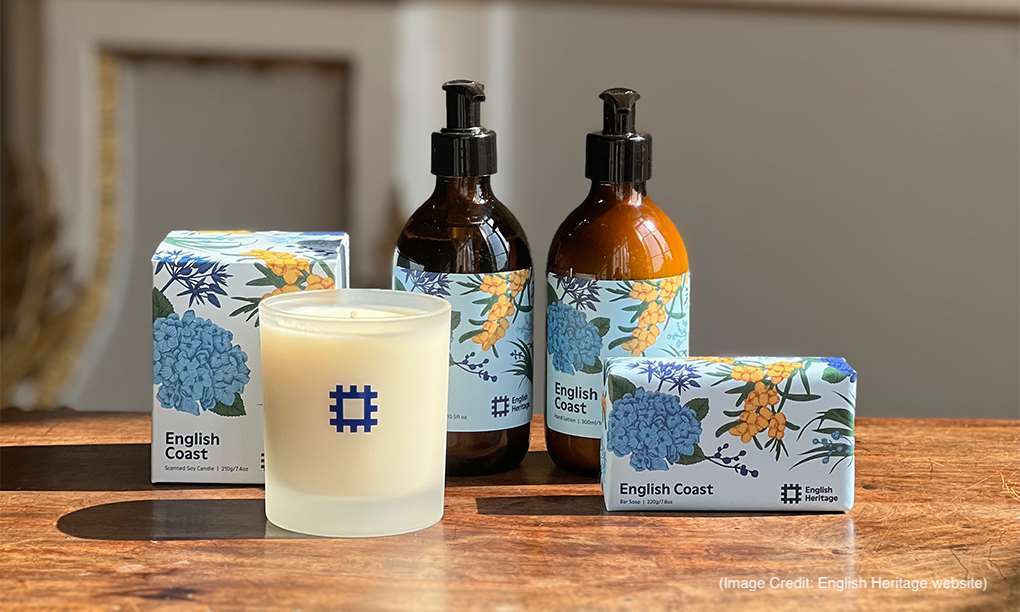
English Heritage’s licensing programme allows the brand to travel far beyond its historic walls. By working with third-party manufacturers and retailers, the organisation has been able to translate its values into products sold in unexpected places: crisps enjoyed at Twickenham Stadium, toys and games in supermarkets, even furniture, kitchens, and soon, ice cream ranges.
The strength of this model lies in reach. Products sold through licensees don’t just generate royalties—creating income independent of footfall at sites—but also carry the English Heritage brand into the everyday lives of people who may never have visited a castle or abbey. These products ride on the strength of the brand’s authenticity and quality, and in turn improve how consumers perceive the goods of their retail partners. For many licensees, English Heritage offers a powerful “foot in the door” with retailers who might otherwise overlook their ranges.
But success does not happen automatically. Each partner must learn how to tell the English Heritage story with integrity. To support this, licensees are guided on how to use the brand responsibly—through in-store storytelling, impactful point-of-sale displays, and prominent use of the instantly recognisable English Heritage logo. This not only raises awareness but also ensures consumers understand the most important message: by choosing these products, they are directly supporting a charity that conserves England’s history.
2. Inspiring Product Development
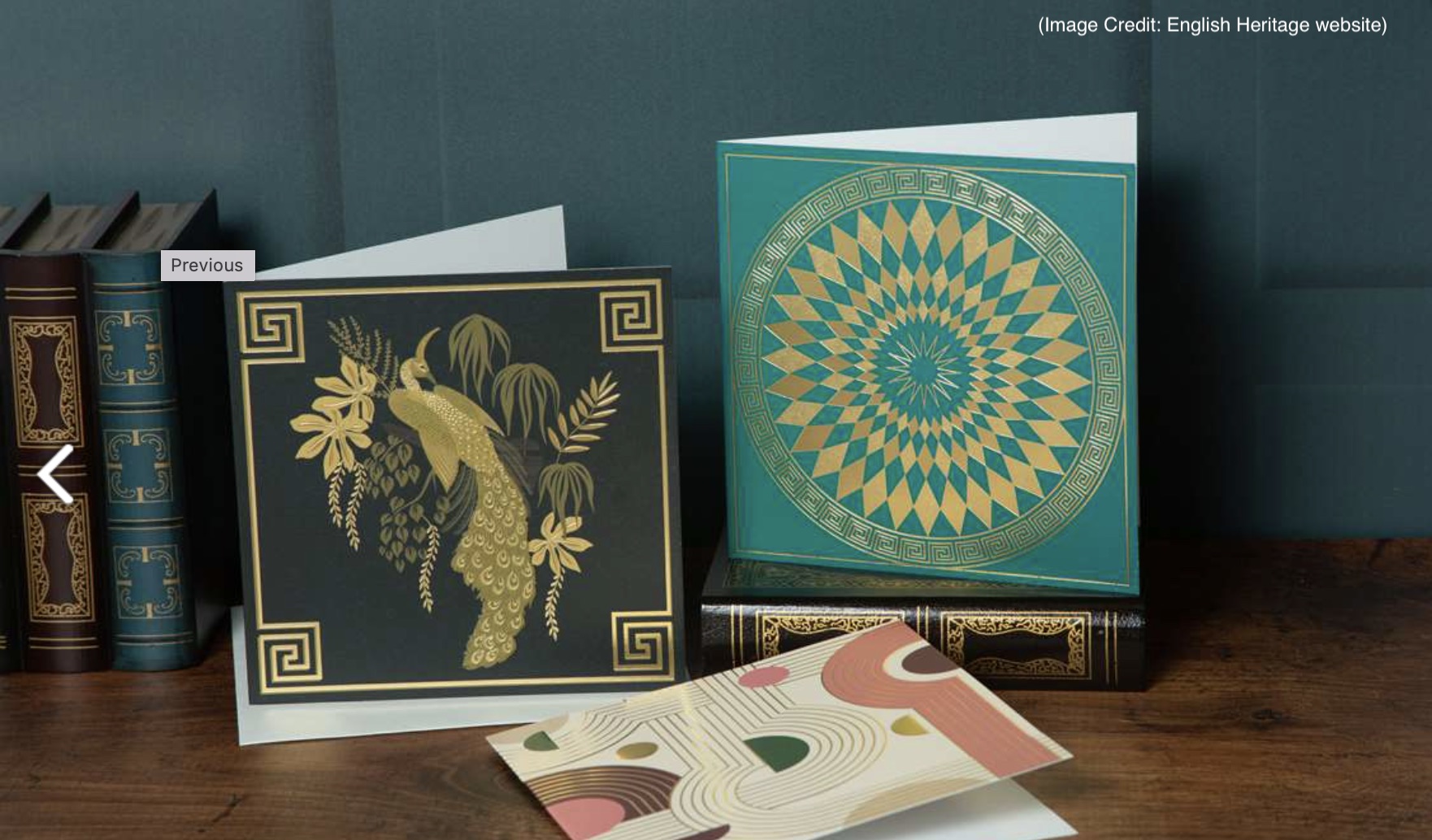
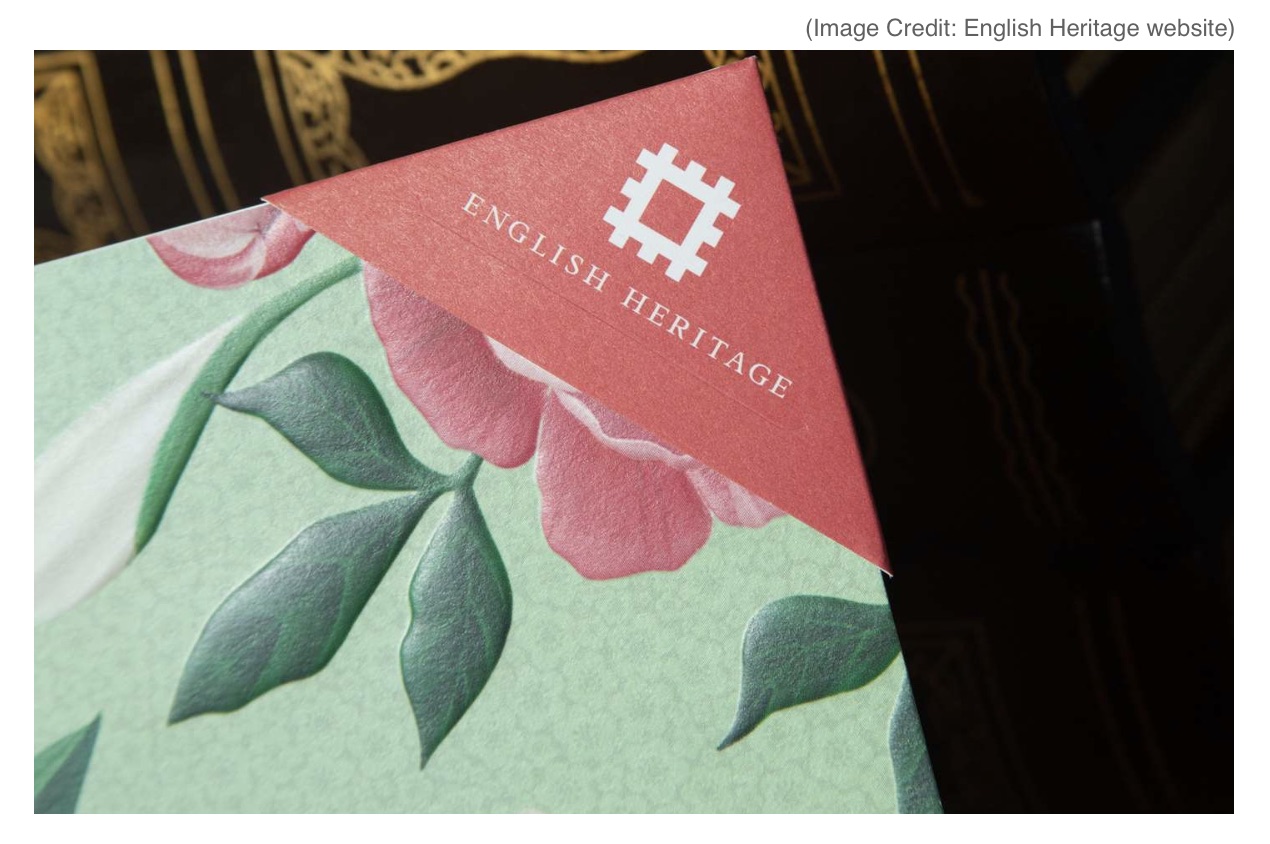
For English Heritage, product development is not just about creating souvenirs—it is about weaving the past into the fabric of modern life. By working closely with curators and historians, the team ensures every design carries authenticity and authority. An archive of historic wallpapers, for example, has inspired contemporary homeware collections: bedding, curtains, lighting, and more. These products are not only functional and beautiful but also carry the weight of history into people’s homes.
The challenge lies in translation. Historic prints and objects must be adapted carefully to appeal to contemporary tastes while retaining their integrity. Every product must feel relevant in today’s marketplace yet true to the stories that inspired it. When done well, the results are distinctive: products that stand out on shelves because they are not only attractive but also meaningful. Each purchase becomes more than a keepsake—it becomes a bridge between past and present, a way for people to take history home.For English Heritage, product development is not just about creating souvenirs—it is about weaving the past into the fabric of modern life. By working closely with curators and historians, the team ensures every design carries authenticity and authority. An archive of historic wallpapers, for example, has inspired contemporary homeware collections: bedding, curtains, lighting, and more. These products are not only functional and beautiful but also carry the weight of history into people’s homes.
The challenge lies in translation. Historic prints and objects must be adapted carefully to appeal to contemporary tastes while retaining their integrity. Every product must feel relevant in today’s marketplace yet true to the stories that inspired it. When done well, the results are distinctive: products that stand out on shelves because they are not only attractive but also meaningful. Each purchase becomes more than a keepsake—it becomes a bridge between past and present, a way for people to take history home.
3. Site Presence and Standards
The heart of English Heritage’s retail experience lies on-site, where shops are more than just outlets for sales—they are stages for storytelling. Here, visual merchandising, signage, and staff training all play a vital role in helping products connect with visitors. Every new range is accompanied by a product launch pack, giving staff the background knowledge to talk with confidence about provenance and inspiration.
This creates a richer visitor journey. A guest might browse wallpaper-inspired homeware or enjoy a snack branded with the English Heritage logo, but thanks to knowledgeable staff and thoughtful displays, they also walk away with an understanding of where those products come from and how their purchase supports conservation work.
Maintaining high standards across more than 100 different sites is no small feat. Each location has its own context, visitor profile, and physical challenges. To manage this, English Heritage equips site teams with clear visual merchandising guides, signage support, and regular training. Equally important is the process of review: ranges are constantly assessed for performance and alignment with values, allowing the organisation to learn quickly from what works and adapt when something doesn’t.
Challenges and Successes
Challenges
- Ensuring that licensees reflect the brand’s values in both products and presentations.
- Reaching and educating consumers who may be unfamiliar with English Heritage’s charitable mission.
- Adapting historic inspiration into products that feel relevant to today’s consumer lifestyles.
- Balancing historical accuracy with modern design sensibilities.
- Delivering consistent retail experiences across diverse sites nationwide.
- Empowering staff to act not just as salespeople, but as brand storytellers.
Successes
- A resilient income stream independent of visitor numbers.
- Expanded public awareness through third-party marketing and retail reach.
- Stronger consumer connection, as purchases become linked to supporting heritage conservation.
- Creation of products that merge beauty with storytelling, resonating strongly with visitors.
- Strengthening of English Heritage’s brand identity, with ranges that are both recognisable and credible.
- Shops transformed into spaces of engagement and connection, rather than simple points of sale.
- Visitors leave not just with a product but with a deeper appreciation of English Heritage’s mission.
Discussion
English Heritage has successfully transformed its brand into a retail and licensing strategy that sustains its mission and deepens public engagement. By rooting product development in authenticity and imagination, investing in staff training to ensure confident storytelling, and extending its reach through licensing, the organisation has struck a balance between commercial success and charitable purpose.
Every product—whether a bar of chocolate from a site shop or a sofa in a department store—becomes a conduit for memory, story, and tradition. In this way, English Heritage demonstrates how heritage organisations can translate their values into products that are not only commercially viable but also meaningful, ensuring that history continues to inspire in everyday life.
Further Resources
Websites:
Images
Image Credit: Alexandra Bovey, Licensing & B2B Manager, and Sarah Lloyd, Income Business Partner – English Heritage.
Official English Heritage Website.