Case Study
Immersive World Building - Buried Giants
Hannah Price, Co-Director, Buried Giants
Background
The growing role of immersive technologies in cultural heritage management has opened fresh opportunities to connect audiences with history in vivid and memorable ways. Among the pioneers of this field is Buried Giants, a creative studio that works at the crossroads of storytelling, performance, and cutting-edge technology. Through projects such as The Gunpowder Plot and the upcoming Museum of Shakespeare, the studio has experimented with bold formats, blending live performance with digital tools to create interactive historical environments that are as educational as they are unforgettable.
Buried Giants works at the intersection of creativity and technology. Acting as creators, producers, and consultants, the studio’s portfolio spans immersive theatre, gaming, and digital storytelling platforms. Their signature philosophy—world building—comes from game design, where everything from laws and landscapes to culture and economy is imagined to create coherent, living universes. Applied to heritage, this method transforms static history into vibrant environments, rewarding curiosity and encouraging audiences to explore, interact, and return.
Alongside designing immersive experiences, the studio has also developed its own platform, bridging worlds of theatre, heritage, and video games.
Heritage organisations have long struggled with how to engage audiences in a digital-first age. Traditional museums and heritage spaces face a persistent challenge: how to communicate complex historical narratives in ways that feel relevant, engaging, and impactful to contemporary audiences. Many heritage visitors expect interactivity, multisensory engagement, and even digital personalization. Yet, heritage sites often struggle with limited budgets, restrictive spaces, and the tension between historical accuracy and public expectation.
Buried Giants set out to test whether immersive storytelling, underpinned by technology, could bridge these gaps — making heritage both accessible and memorable, while also introducing new commercial opportunities.
Approaches
The studio’s central aim was to turn passive storytelling into “story-doing” — transforming audiences from observers into participants. Their approach revolved around:
- World-building as the foundation of design.
- Experimentation with multiple immersive formats, from free-roaming environments to guided narratives.
- Harnessing emerging technologies such as VR, AR, ambisonic sound, haptics, holograms, and volumetric displays.
- Embedding historical authenticity into experiences while balancing audience expectations.
At the heart of all Buried Giants’ projects lies the discipline of world building. Borrowed from game design, this approach creates coherent universes where every detail—the laws, the economy, even the weather—supports the narrative. Applying this to heritage storytelling allows visitors to step into believable environments that feel larger than any single exhibit. This philosophy guided two flagship projects: The Gunpowder Plot and the Museum of Shakespeare.
Resources
Rethinking Heritage Futures, Online Workshop “Utilising New Technologies in the Management of Cultural Heritage”, 30 April 2025, Nottingham Trent University (NTU), Communication University of China (CUC).
Projects
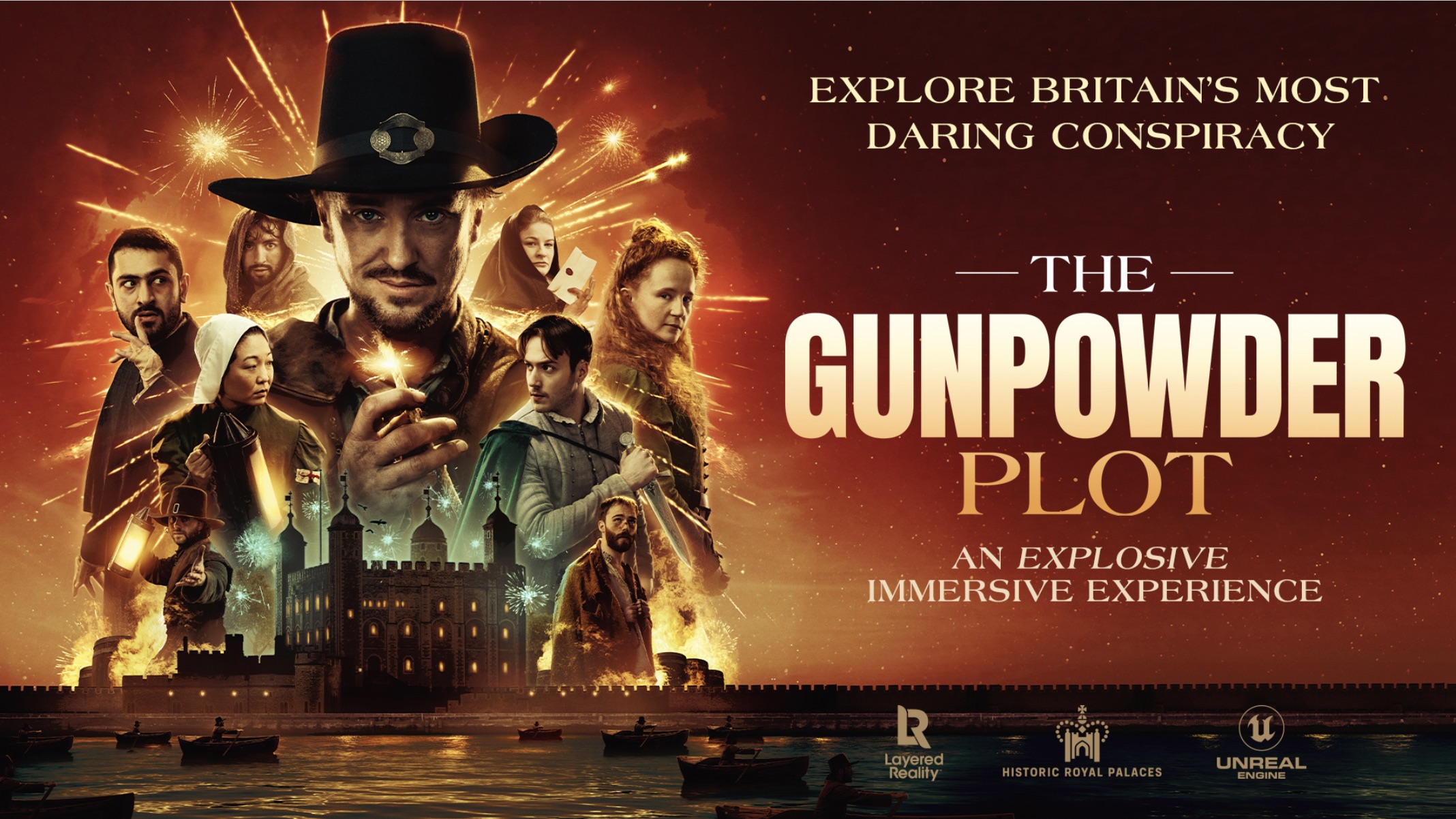
1. The Gunpowder Plot
Set in the shadow of the Tower of London, The Gunpowder Plot was an ambitious, three-year production that combined immersive theatre with virtual reality. Audiences navigated a 25,000-square-foot underground vault in groups, moving through eight distinct spaces in a continuous “carousel” flow.
The design was deliberately cinematic: a 90-minute linear narrative with two possible endings depending on audience decisions. The technology was extensive — three major VR sequences with ambisonic sound, large-scale projection, and a range of sensory effects including temperature shifts, wind, smells, and vibrations.
However, The project faced daunting obstacles. The physical environment was inhospitable — the vault was riddled with structural difficulties and even infestations after decades of disuse. Achieving the right balance between historical accuracy and audience expectation was another hurdle; early tests revealed that too much realism distracted audiences, who instead needed a curated sense of “selective authenticity” to stay immersed. Budget and space limitations also meant creativity had to be channelled into VR to simulate journeys, from zipwire flights to boat rides.
Despite the challenges, the production was a commercial and creative triumph. With 170,000 tickets sold, it demonstrated the appetite for immersive heritage. The dual endings created emotional stakes, forcing audiences to confront the moral question: is violence for a cause ever justified? The combination of live actors, VR, sensory design, and historical storytelling proved deeply memorable, with research showing participants retained information up to 70% longer than with traditional interpretation.
2. The Museum of Shakespeare
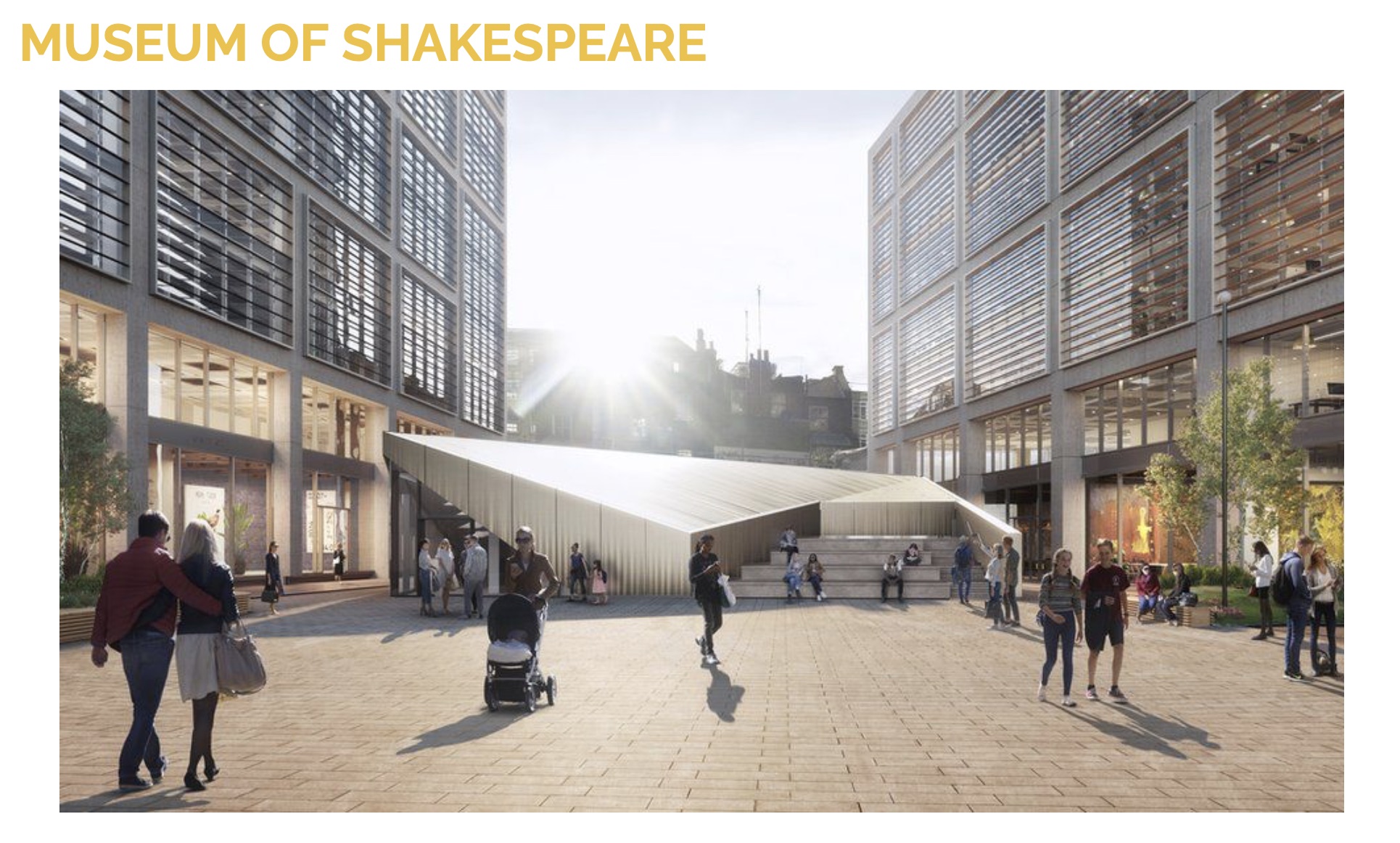
Still in development, the Museum of Shakespeare will bring to life the newly uncovered remains of the Curtain Theatre. The project pushes immersive storytelling further by embedding digital tools into the very fabric of the museum. Plans include holographic displays to enlarge small artefacts, volumetric capture to create explorable 3D recreations, and ambisonic soundscapes to anchor visitors within Shakespeare’s world.
As with The Gunpowder Plot, authenticity required delicate handling. The team had to walk the line between strict historical evidence and visitor expectation of what Shakespeare’s world “should” look like. Space constraints demanded new forms of compact yet powerful storytelling.
The project highlights the versatility of immersive technologies — from wearables and AR layers to projection mapping — in shaping a museum experience that feels both intimate and expansive. Even before opening, the project has demonstrated how immersive design can transform archaeological remains into a living, breathing story world.
3. The Everything Chamber
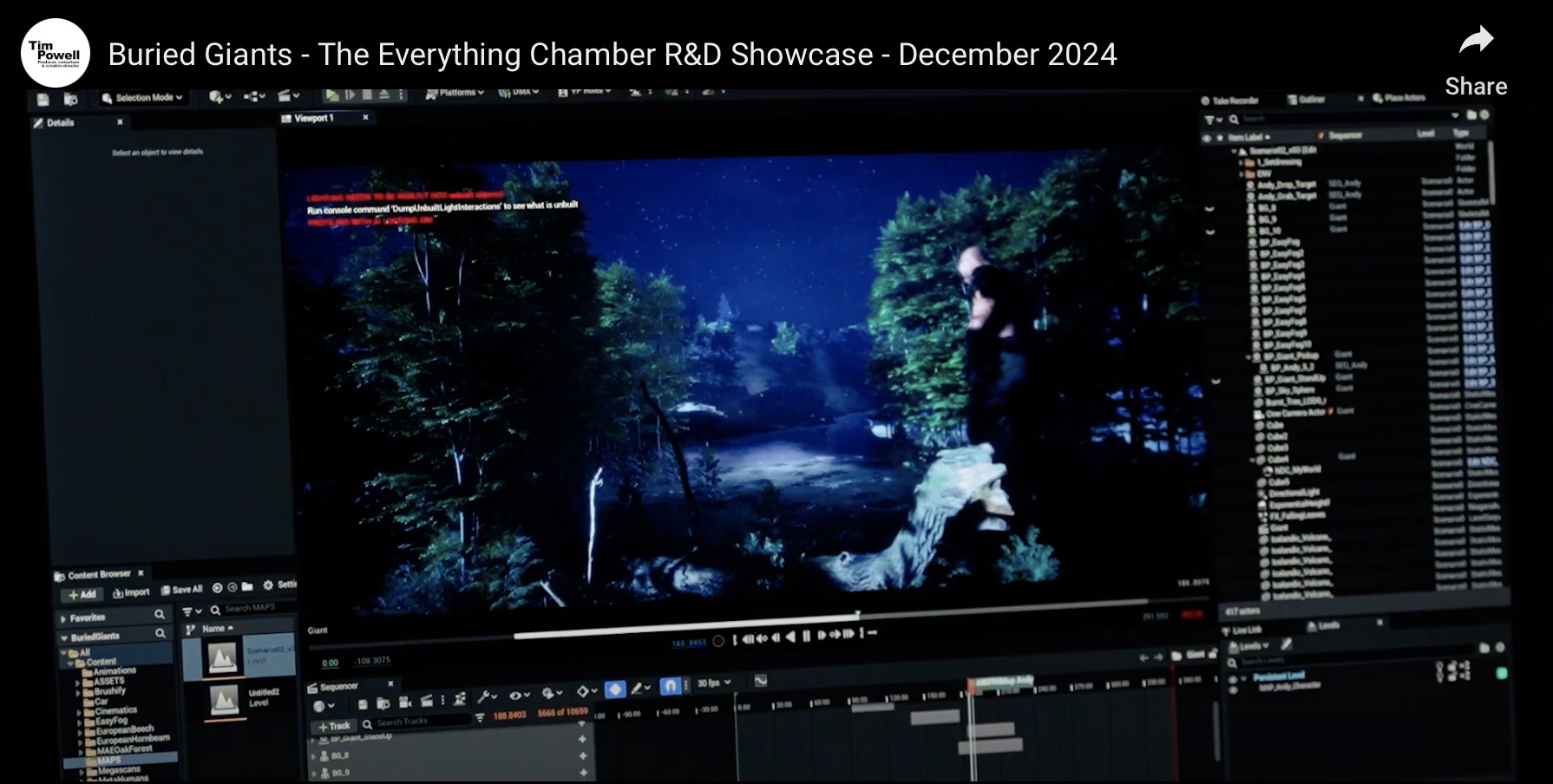
This project represent an adaptable, accessible, fully immersive performance space focused on artistic excellence with a built in production process for midscale work. Buried Giants experimented with a wide array of formats. Experiences could be free-roaming or guided, structured as linear carousels or punctuated with interactive elements. Spatialized sound emerged as a cost-effective yet powerful tool, while haptics and projection created visceral moments like explosions or shifting landscapes.
Emerging technologies further expanded possibilities:
- VR & AR for immersive and overlay experiences.
- Volumetric capture and LED-based “volume” stages for creating new worlds.
- Holograms for presenting small artefacts on a grand scale.
- Motion simulators and haptics to make physical sensations part of storytelling.
- AI and digital twins to generate adaptive experiences and test environments.
Each technology came with practical challenges — from cost to technical complexity — but also opened new doors for transmedia storytelling, allowing a single world to exist across live spaces, digital platforms, and post-visit engagement.
Challenges and Successes
Challenges
The Gunpowder Plot
- The historic site itself posed difficulties: technically complex to fit with the tech systems.
- Ensuring a seamless blend between live actors and digital content required extensive rehearsal and creative experimentation.
- Maintaining a constant flow of audiences without breaking immersion.
The Museum of Shakespeare
- Working with an active archaeological site means balancing conservation with innovation.
- Designing immersive layers that respect historical accuracy while offering compelling visitor experiences is a delicate process.
Successes
The Gunpowder Plot
- The show became a benchmark for heritage-based immersive theatre, praised for its combination of storytelling, history, and cutting-edge tech.
- Its narrative gave participants agency, with repeat visits and sustained engagement.
- It proved that large-scale immersive heritage storytelling could be both commercially viable and critically acclaimed.
The Museum of Shakespeare
- By using immersive storytelling, the museum aims to go beyond static exhibits, giving visitors a sense of place, performance, and community in Elizabethan London.
- It demonstrates the adaptability of immersive techniques to both live events and permanent museum contexts.
Discussion
The work of Buried Giants shows how immersive technology can reshape cultural heritage for modern audiences. Their projects demonstrate that:
• Immersion can deepen learning and memory retention.
• Storytelling formats are highly adaptable, from intimate soundscapes to expansive VR worlds.
• Success requires balancing historical authenticity with the expectations of contemporary audiences.
• Effective world-building creates a framework for using technology creatively while aligning with institutional goals.
Translating the scale of fictional world-building into heritage contexts can be resource-intensive and requires negotiation between curators safeguarding historical accuracy and creatives seeking narrative freedom. But the rewards are considerable. Visitors are no longer passive spectators but explorers with agency; each experience is unique, personal, and memorable. Their work demonstrates that heritage interpretation in the digital age is not about gadgets or gimmicks. It is about creating worlds where the past is felt as much as it is seen, where audiences become participants in the story, and where history resonates as a shared, living experience.
By layering sight, sound, touch, and even smell into their projects, Buried Giants ensured that history was not just learned but lived. This approach also opened new possibilities—digital postcards and post-visit content extended engagement beyond the event itself, while expanded worlds created new revenue streams and ongoing community involvement.
The result has been environments that are not only commercially successful but socially impactful, leaving audiences with deeper emotional connections and longer-lasting memories.
Further Resources
Websites:
Images
Image Credit: Hannah Price, Co-Director Buried Giants.