Case Study
National Videogame Museum, Sheffield
John O’Shea, Creative Director and co-CEO,
National Videogame Museum, Sheffield, UK
Background
The National Videogame Museum (NVM), based in Sheffield, is the UK’s only museum dedicated entirely to video games and video game culture. Established in 2018, the museum preserves over 5,000 objects of gaming heritage, hosts more than 100 playable exhibits, and welcomes around 50,000 visitors annually—70% of whom travel from outside Sheffield.
With its mission to inspire everyone to play, collaborate, and learn, the museum blends traditional exhibition practices with hands-on play, educational programming, vocational initiatives, and research into the cultural value of games. Its approach celebrates video games not only as technological achievements but as cultural artefacts that shape lives, communities, and career paths.
Despite the global scale of the games industry, video games are often misunderstood as cultural artefacts. Their creation processes remain hidden from public view, their communities overlooked, and their influence outside entertainment rarely recognised.
Approaches
As a young museum, NVM faced the challenge of:
- Preserving fragile heritage while keeping games playable.
- Demystifying the creative and technical processes of game-making.
- Capturing the social and cultural importance of games, particularly during the pandemic.
- Demonstrating that video games matter as a legitimate and accessible art form.
To respond to these challenges, NVM set out to:
- Make play central to the museum experience.
- Reveal the hidden processes of game design and development.
- Highlight player communities, particularly their role in shaping culture.
- Explore the wider influence of gaming beyond screens and consoles.
Resources
Rethinking Heritage Futures, Online Workshop “Utilising New Technologies in the Management of Cultural Heritage”, 30 April 2025, Nottingham Trent University (NTU), Communication University of China (CUC).
Strategies
1. Centering Play in the Museum Experience
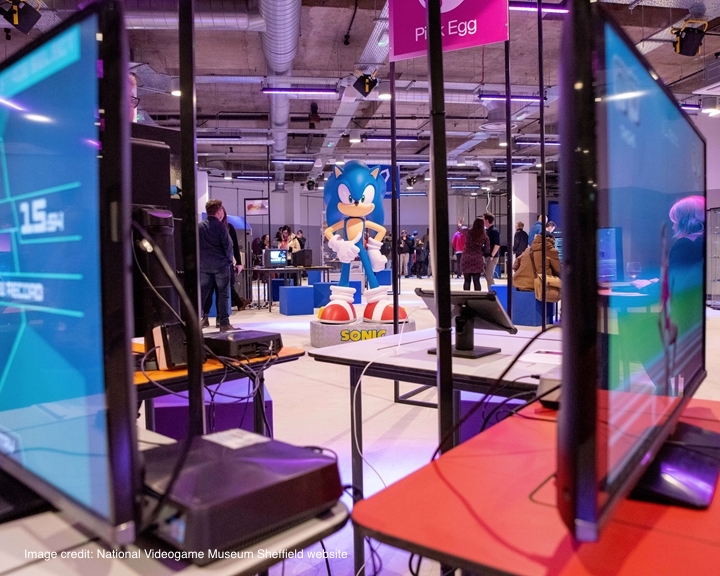
From the outset, NVM distinguished itself from traditional museums by making play central to its exhibitions. Visitors are encouraged to interact directly with consoles, games, and controllers—whether it’s families sharing a nostalgic experience or children discovering rhythm games like Rock Band.
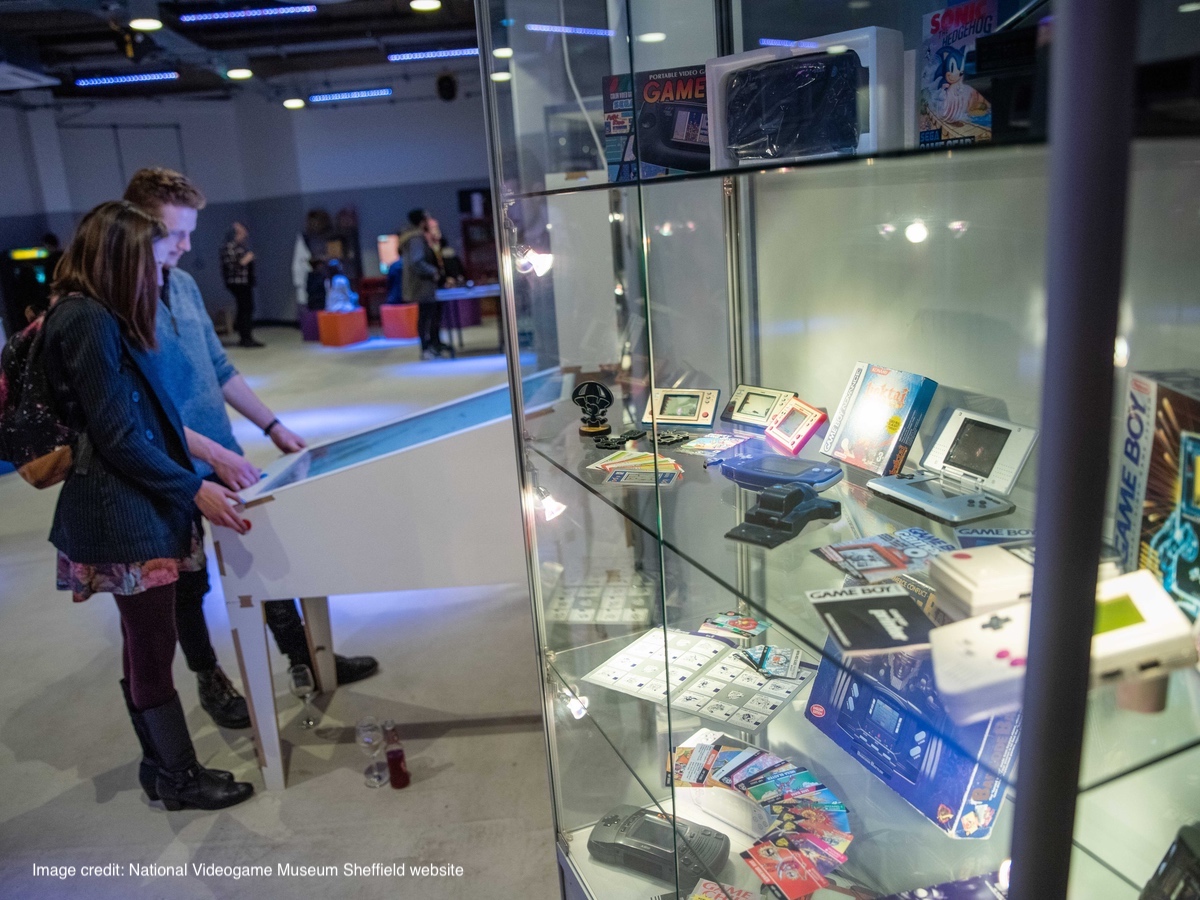
However, maintaining this balance between preservation and play was not easy. Many historic objects are fragile, and there was a constant tension between protecting the heritage items and ensuring they could still be experienced in their original, playable form.
By creating hybrid exhibitions—where some artefacts are safeguarded in display cases while others remain hands-on—the museum preserved authenticity while keeping interactivity alive. This approach has contributed to a 95% visitor satisfaction rate, with guests highlighting the joy of shared, intergenerational play.
2. Demystifying Game Creation: The “Behind the Screens” Initiative
Many visitors enjoy video games without understanding how they are made. To address this, NVM developed exhibitions that pulled back the curtain on game creation. Shows like The Art of Play spotlighted the artistry, design, and creativity behind popular games, from hand-drawn level maps for Fantasy World Dizzy to architectural models used in Lumino City.
One difficulty was that the industry itself often remains invisible: even in Sheffield, where major studios like Sumo Digital operate, many locals are unaware of their presence. Another challenge lay in presenting technical development processes in a way that was accessible and engaging for general audiences.
Neverthless, by showcasing tangible objects—such as the Oliver Twins’ hand-drawn game maps or the Amiga 4000 computer used to develop Worms—the museum gave physical form to abstract processes. These artefacts not only fascinated visitors but also became powerful teaching tools, helping students and families alike understand that video games are the product of creativity, iteration, and human labor.
3. Highlighting the Role of Players and Communities
Recognizing that games only come alive when played, the museum began curating stories from players themselves. The Animal Crossing Diaries project, launched during COVID-19 lockdowns, created a digital archive where individuals could submit personal reflections on playing Animal Crossing: New Horizons.
Conducting an entirely online exhibition during the pandemic was uncharted territory. The team faced the dual task of designing a user-friendly platform and convincing players to share their intimate experiences of play during a difficult time.
The response was overwhelming. Entries ranged from poetic reflections to deeply personal stories, revealing how games became lifelines for mental health, routine, and social connection. The project quickly gained recognition beyond gaming circles, with researchers citing it as a vital cultural record of life during the pandemic. In this way, the museum not only documented gaming culture but also captured a broader human story of resilience.
4. Expanding Understanding: Games Beyond Play
Another strand of NVM’s collecting strategy, called Out of Play, explored how gaming logic and design principles influence wider culture. From early “gamified” gym equipment to mainstream crossovers like The Last of Us TV series, the museum highlighted how video games have reshaped daily life and popular culture. This theme was broad and complex. Tracing gaming’s influence outside the industry required careful selection of objects and narratives to avoid overwhelming visitors with abstract ideas. By curating accessible examples—like a 1970s rowing machine that incorporated gaming mechanics—the museum made gamification tangible and relatable. Visitors left with a deeper appreciation of how games extend beyond screens, influencing fitness, media, and even social behavior.
Challenges and Successes
Challenges
- Balancing the need to conserve objects with the imperative to keep games alive through play.
- The industry itself often remains invisible. Explaining technical processes in an accessible way required careful interpretation.
- Creating a fully digital exhibition that encourage individuals to share personal experiences.
- The breadth of the theme risked overwhelming audiences with abstract ideas.
Successes
- Hybrid model preserved authenticity while ensuring interactivity.
- Displaying tangible objects and development materials giving form to abstract processes.
- Cultural archive, capturing the social and psychological impact of gaming. Researchers have since drawn on it as evidence of games’ role in wellbeing and connection.
- Accessible case studies revealing the reach of games beyond entertainment.
Discussion
The National Videogame Museum demonstrates how a young institution can build legitimacy and impact by placing play, creativity, and community at the heart of its practice:
- Using play, it transformed the museum visit into an active, joyful experience.
- Revealing the creative processes, it demystified an industry often hidden from public view.
- Highlighting player communities, it showed how games foster connection, especially in times of crisis.
- Exploring cultural influence, it demonstrated that games are not just entertainment but a powerful lens for understanding contemporary life.
In doing so, NVM has shown that video games can matter not only as entertainment but as a cultural form that connects generations, fosters creativity, and reflects contemporary life.
Further Resources
Websites:
The National Videogame Museum Sheffield – thenvm.org
Images
Image Credit: National Videogames Museum Sheffield, official website.