Case Study
Heritage Open Days, The National Trust UK: Building Community Engagement
Sarah Holloway, Heritage Open Days Programme Manager, The National Trust, England
Background
Heritage Open Days demonstrates how large-scale, community-driven heritage events and initiatives can foster public engagement, local pride, and cultural sustainability.
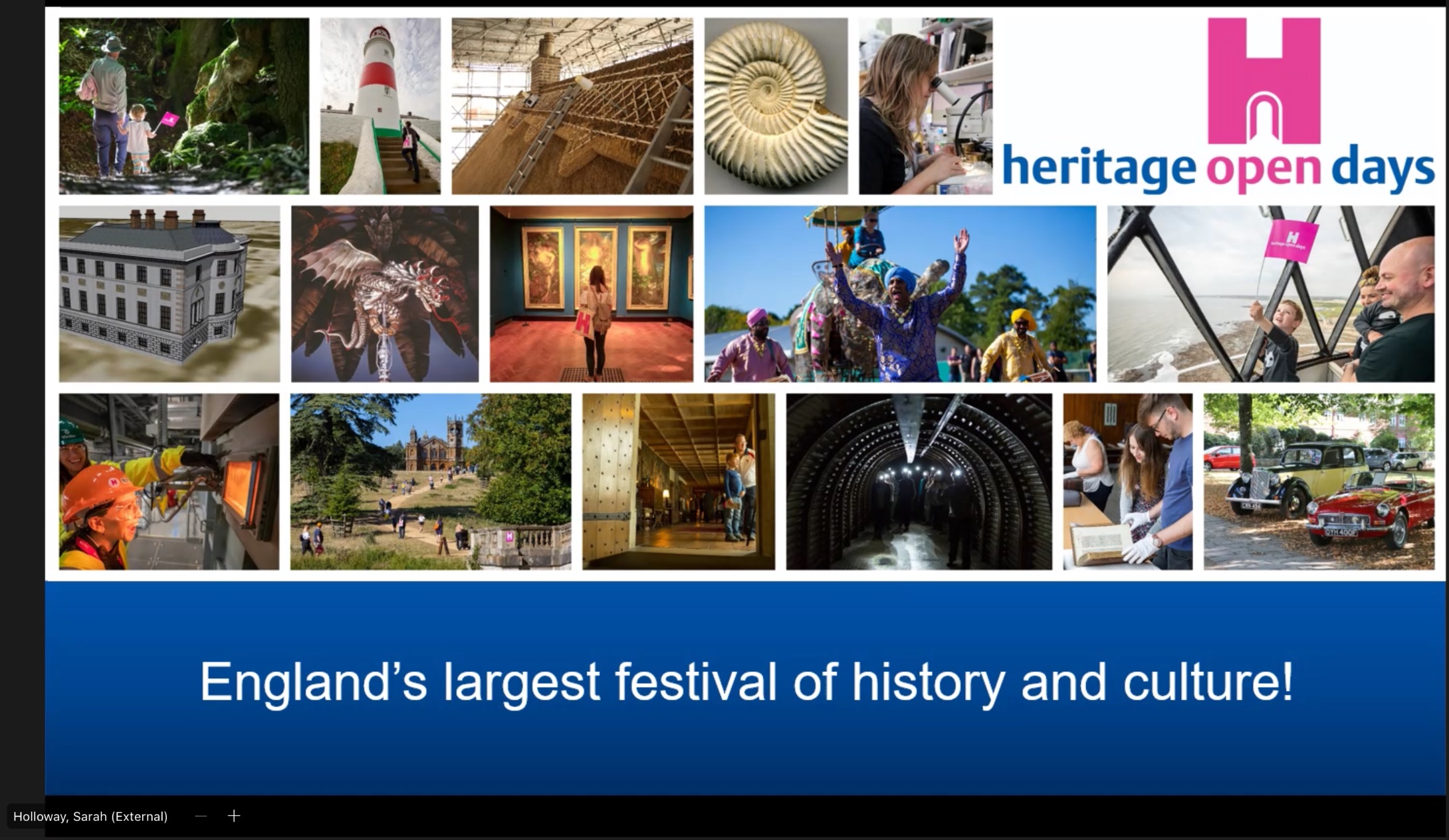
Heritage Open Days (HODs) is England’s largest festival of history and culture, held annually every September. It provides free access to thousands of heritage sites, buildings, and community events across the country.
Originating from a Europe-wide initiative, Heritage Open Days has evolved into a defining feature of the UK’s cultural calendar. It celebrates both tangible and intangible heritage—from historic homes and factories to local traditions, crafts, and cultural performances. Managed by a small national team within the National Trust and supported by the People’s Postcode Lottery, local coordinators and volunteers, HODs operates on a decentralized model.
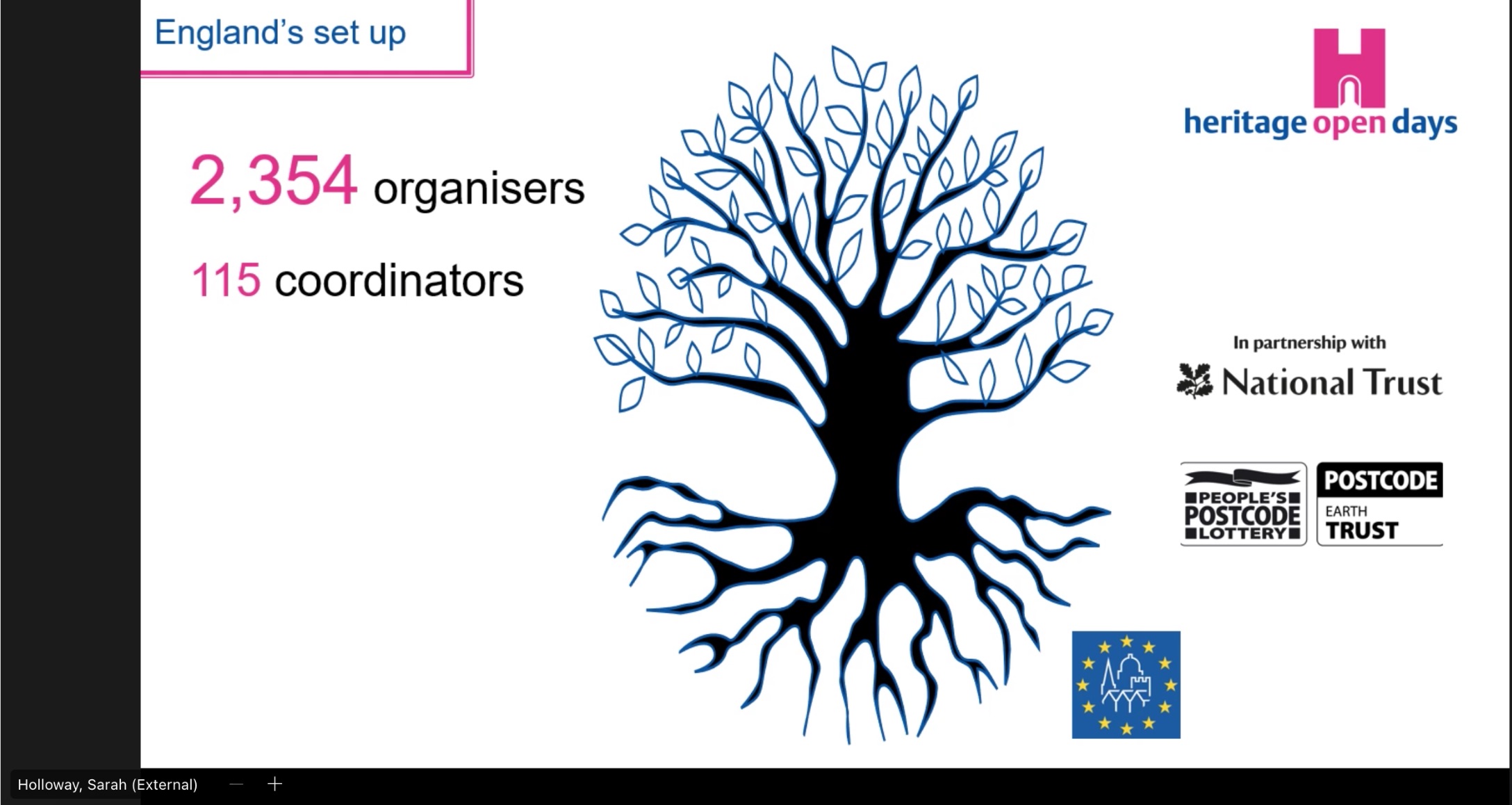
Its “tree structure” symbolizes the collaboration between the European roots, the national coordinating trunk, and the local branches—a vast network of over 2,300 local organizers and 40,000 volunteers who deliver approximately 5,500 events each year.
Each event—ranging from open houses and walking tours to creative workshops—invites audiences to explore and reinterpret their local heritage. With over a million visitors annually, Heritage Open Days is not only a cultural celebration but also a social movement that democratizes heritage by making it free, inclusive, and community-led.
The festival has become a cornerstone of participatory heritage practice in the UK. It enhances public access, fosters community pride, and stimulates local economies while providing a model for large-scale, community-driven cultural engagement.
Approaches
HODs employs an innovative, community-centered and partnership-driven approach grounded in three key principles:
- Accessibility and Inclusion: Every event is free, ensuring that heritage is open to everyone regardless of background or income.
- Empowerment and Partnership: Local coordinators are encouraged to take creative ownership of their events, supported by national guidance, resources, and peer-to-peer learning.
- Sustainability and Collaboration: Through partnerships with organizations such as The Gardens Trust, Kids in Museums, and VocalEyes, HODs broadens its reach and inclusivity, fostering collaboration across the heritage, education, and accessibility sectors.
This model emphasizes empowerment over control—offering frameworks, themes, and inspiration while allowing local creativity to flourish.
Resources
Rethinking Heritage Futures, Online Workshop “Designing Heritage Events”, 18 March 2025, Nottingham Trent University (NTU), Communication University of China (CUC).
Approches
1. The Structure: The “Tree” and “Wheel” Model
The “tree” structure illustrates the organic collaboration between the national coordinators and local communities, while the “wheel” model represents the annual planning cycle—registration, marketing, delivery, and evaluation. Each stage reinforces the others, creating a sustainable, evolving framework that continuously learns from experience.
This cyclical structure allows Heritage Open Days to remain adaptive, ensuring that lessons from each year feed directly into future planning and capacity building.
In 2023, this structure supported 2,354 local organizers and 115 regional coordinators, who in turn mobilized over 40,000 volunteers and 8,000 paid staff. The result was a festival of 5,500 events, attended by approximately one million visitors nationwide.
Visitor satisfaction levels remain exceptionally high, with a Net Promoter Score of 90 (80 is considered world-class). Evaluation also shows that 91% of attendees learn something new, and 82% feel more pride in their local area after participating. Remarkably, 25–33% of visitors had not attended any heritage site in the previous 12 months—demonstrating HODs’ success in attracting new audiences.
2. Economic and Social Impact
While HODs is built on the principle of free access, its broader economic impact is significant. Through secondary spending—such as food, accommodation, and local transport—the festival contributes more than £11 million annually to local economies.
Visitors are not only more likely to return to heritage sites (two-thirds report they will visit more heritage locations in the future) but also to make voluntary financial contributions. Around 66% of attendees make donations when given the opportunity, directly supporting local heritage sites.
Beyond economics, the festival’s social benefits are profound. Comments frequently highlight the discovery of “hidden” heritage. Such moments foster a deeper sense of belonging and encourage civic pride through shared cultural discovery.
3. National Themes and Partnerships
Each year, the festival adopts a national theme, such as architecture, creativity, food heritage, or women’s history. These rotating themes inspire new partnerships, attract diverse audiences, and encourage reinterpretation of local histories. For instance, partnerships with The Gardens Trust have expanded programming on “green heritage,” while collaboration with Kids in Museums promotes intergenerational engagement.
Through VocalEyes, the festival has also improved accessibility for visitors with visual impairments, further reinforcing inclusivity as a central value.
In addition, the national team supports organizers with micro-grants, free insurance, marketing templates, risk assessment guides, and popular promotional materials—including pink banners, lanyards, and bunting. The bright pink branding, chosen for its visibility, not only unites the national festival but also ensures that heritage spaces become visually prominent and approachable.
4. Community Empowerment and Experimentation
One of HODs’ most distinctive features is its commitment to community empowerment. The festival’s free, open-access structure lowers barriers to entry, encouraging individuals and groups—whether professionals or first-time organizers—to share their local stories.
Participants are given the “license to experiment,” testing new interpretive formats and ideas without financial pressure. Many museum professionals use the festival to pilot creative programming, while community members discover the joy of storytelling through heritage.
Feedback consistently highlights that what visitors value most is authentic passion—the personal narratives and enthusiasm of local storytellers—rather than polished professional presentation.
Challenges and Successes
Challenges
- Limited central funding (“running on a shoestring”) constrains expansion and support capacity.
- Quality of events can vary due to decentralized delivery.
- Reliance on volunteer labor raises sustainability concerns.
- Need for continuous evaluation and training to maintain standards.
- Balancing national coherence with local independence.
Successes
- Reaches over 1 million visitors annually, with exceptionally high satisfaction (Net Promoter Score: 90).
- Introduces new audiences to heritage—up to one-third are first-time visitors.
- Strengthens community cohesion and local pride (82% of visitors feel more connected to their area).
- Generates substantial economic impact (£11 million contribution annually).
- Fosters inclusivity through free access, accessibility initiatives, and family-friendly programming.
- Encourages innovation and cross-sector partnerships through national themes.
Discussion
By transforming heritage from static display to lived experience, HODs exemplifies the potential of heritage events to act as catalysts for civic participation and cultural renewal. Its success lies in a participatory structure that combines minimal central coordination with maximal local autonomy. The festival’s impact extends beyond cultural enrichment: it strengthens social cohesion, diversifies heritage participation, and contributes over £11 million annually to local economies through tourism and secondary spending.
The Heritage Open Days model invites reflection on how participatory heritage frameworks can be scaled and sustained. Its success raises questions about the future of community-led cultural management:
How can similar festivals balance freedom and quality?
What role should national institutions play in supporting local creativity without diminishing it?
And as digital participation grows, how can festivals like HODs retain the human connection that makes them so powerful?
Heritage Open Days demonstrates that heritage engagement thrives not on wealth or hierarchy, but on collaboration, creativity, and shared ownership of the past—a model that continues to inspire across Europe and beyond.
Further Resources
Websites:
Main website: Homepage
Festival Review 2024 – Some key statistics and anecdotes about last year’s festival.
Images
Image Credit: Sarah Holloway, Heritage Open Days Programme Manager, The National Trust, England.