Case Study
Designing Heritage Events in Chinese Museums: Immersive Cases
Cai Jing, Associate Professor, CUC
Background
This case study examines the intersection of events, cultural heritage and digital innovation within Chinese museums, with particular attention to the ways in which events can transform the visitor experience and expanded opportunities for cultural education. Through an analysis of three key initiatives—the Confucian Six Arts City, the Ancient China Cloud Project, and the Western Han Dynasty Bronze Bell Exhibition—the study explores how immersive and interactive approaches have redefined museum practices in China. These cases collectively demonstrate the country’s commitment to merging traditional heritage with technological innovation to promote cultural vitality, accessibility, and global engagement.
The digital transformation of China’s cultural heritage sector marks a significant paradigm shift in how museums conceptualize, present, and communicate the past. The integration of big data, artificial intelligence (AI), augmented reality (AR), and interactive media has allowed institutions to transcend the traditional constraints of time and space, offering new pathways for public participation and cultural dissemination.
Such transformations have not only revitalized historical artifacts but have also enabled a more inclusive, dialogic form of heritage engagement. For instance, the Digital Palace Museum App allows global audiences to access and appreciate the treasures of the Forbidden City remotely, while interactive installations at the National Museum of Natural History encourage children to explore ancient origins through playful learning. These examples illustrate how technology has evolved from a supplementary display tool into a central medium for interpretation, education, and transnational cultural exchange.
Approaches
The contemporary approach adopted by Chinese museums integrates technological mediation as an intrinsic component of curatorial and educational practice. Rather than employing digital tools as superficial enhancements, institutions are embedding them within the conceptual and experiential design of exhibitions to facilitate deeper engagement with cultural content.
This strategy is underpinned by three primary objectives:
- Revitalization of ancient heritage, by enabling the digital restoration and reinterpretation of cultural relics.
- Expansion of educational and participatory engagement, particularly among younger audiences through interactive learning environments.
- Extension of cultural communication, by creating hybrid physical–digital spaces that allow for global accessibility.
Through this model, digital innovation operates not as a substitute for the tangible museum experience but as an instrument for amplifying cultural resonance, sustaining relevance, and fostering intercultural understanding.
Resources
Rethinking Heritage Futures, Online Workshop “Designing Heritage Events”, 18 March 2025, Nottingham Trent University (NTU), Communication University of China (CUC).
Projects
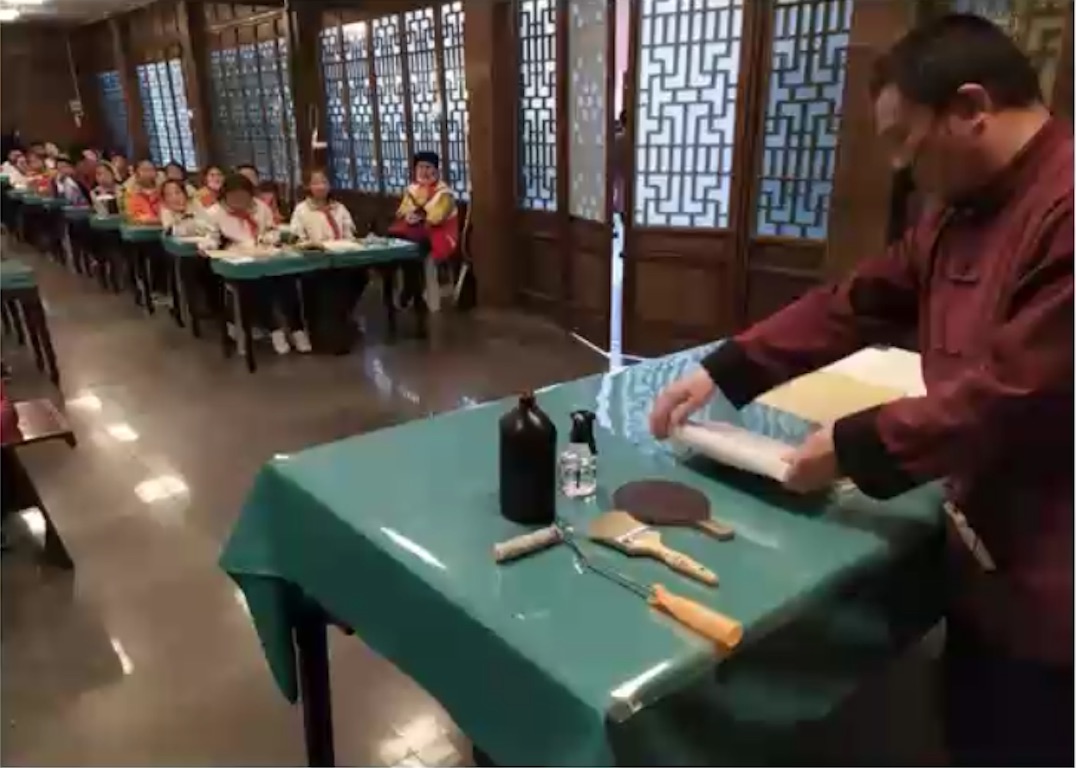
1. The Confucian Six Arts City: From Ancient Origin to Modern Revival
Situated in Qufu, the birthplace of Confucius, the Six Arts City project reimagines the ancient Confucian curriculum—comprising ritual, music, archery, charioteering, calligraphy, and mathematics—through the lens of contemporary museology and digital design.
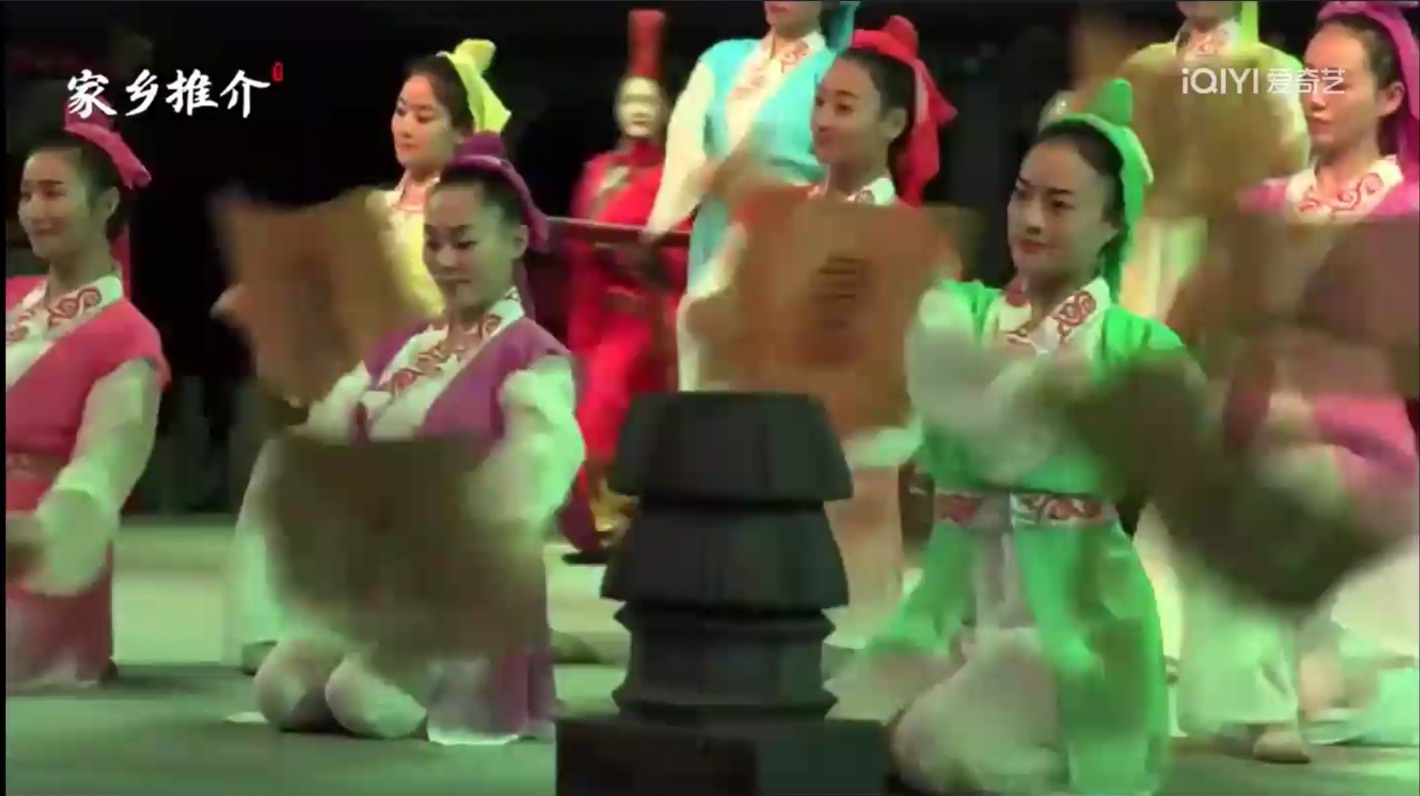
The project integrates interactive technologies, AR simulations, and performative learning to recreate historical educational settings in which visitors actively participate. Themed spaces such as the Rites Hall and Archery Arena enable visitors, particularly children and students, to experience traditional disciplines through multisensory engagement. These installations encourage the embodiment of Confucian values such as discipline, moral cultivation, and harmony within an interactive pedagogical framework.
By merging ancient philosophies with modern technological platforms, the Six Arts City fosters what may be termed a “living heritage ecology,” where traditional cultural practices are not merely displayed but experienced and internalized. This approach enhances both the cultural confidence of participants and the sustainability of intangible heritage transmission.
2. The Ancient China Cloud Project: Expanding Access Through Virtual Heritage
The Ancient China Cloud Project, initiated by the National Museum of China, constitutes one of the most ambitious digital heritage initiatives in Asia. Developed during the COVID-19 pandemic, this project was conceived as a response to the limitations of physical visitation and as an instrument for promoting global access to Chinese heritage.
Using high-definition digital scanning, online interactive narratives, and gamified learning experiences, the platform presents key periods in Chinese civilization alongside virtual reconstructions of artifacts and historical environments. Users are able to navigate temporal sequences, examine the evolution of writing systems, and access contextual information through multimedia storytelling.
This initiative exemplifies how digital technologies can democratize heritage access and transform the museum into a transnational cultural hub. By removing spatial and temporal barriers, the Ancient China Cloud Project establishes a framework for participatory knowledge exchange and for the redefinition of cultural diplomacy in the digital age.
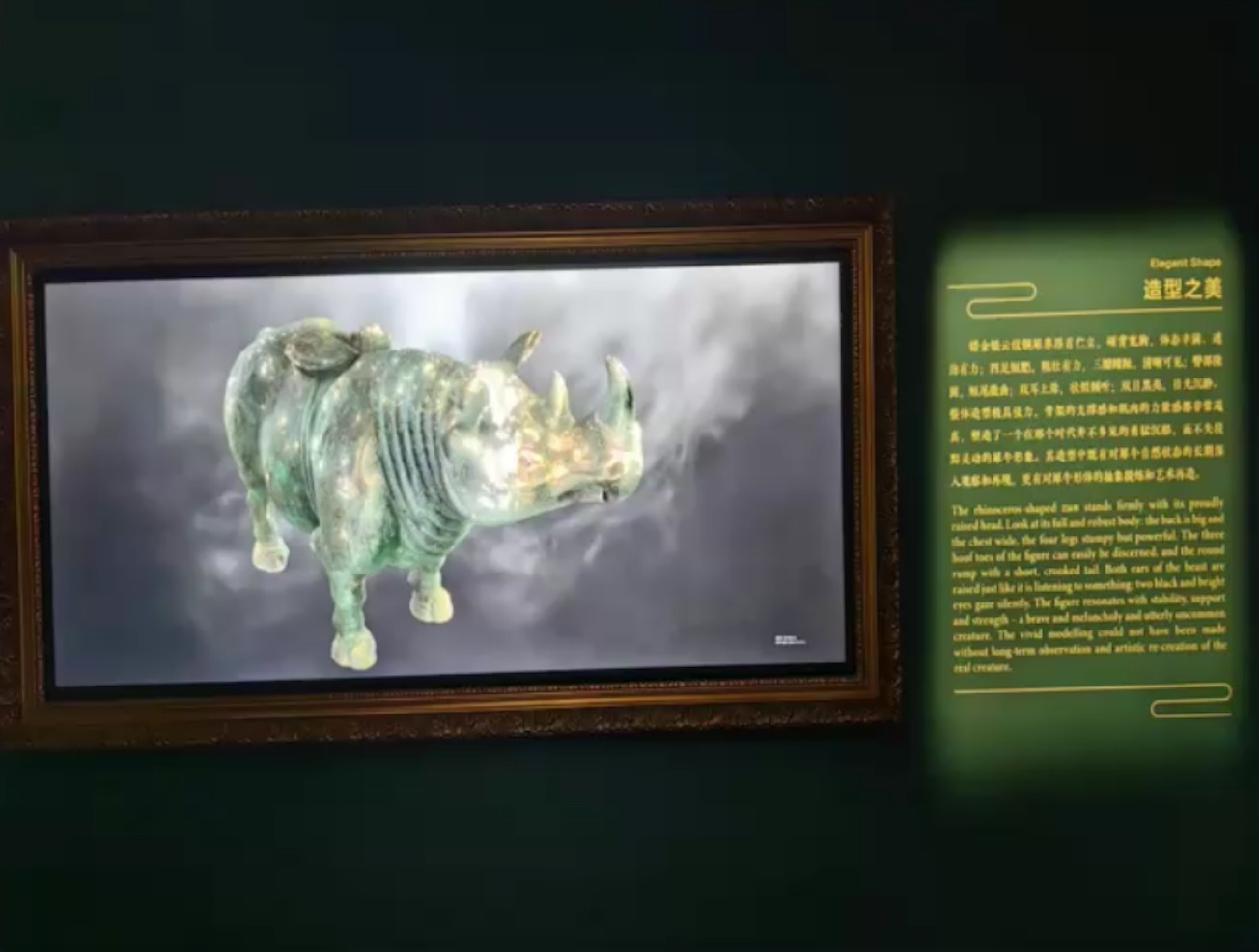
3. The Western Han Dynasty Bronze Bell Exhibition: High-Definition Cultural Immersion
The Western Han Dynasty Bronze Bell Exhibition, also presented at the National Museum of China, offers a case of deep technological integration within a focused curatorial scope. Centred on a single artifact—a bronze bell dating from approximately 2,000 years ago—the exhibition utilizes 3D scanning, AR environments, and environmental monitoring systems to provide an in-depth, multisensory exploration of the object’s materiality and symbolism.
Visitors interact with digital models that reveal micro-level details of the bell’s craftsmanship, while sensor-activated interfaces guide them through its historical, technological, and artistic contexts. This comprehensive digitization of the artifact’s “life cycle”—from excavation to conservation and display—represents an important methodological advancement for the field. It establishes a replicable model for integrating research, conservation, and education within an immersive exhibition framework.
The exhibition not only enhances the visitor’s experiential understanding but also advances scholarly inquiry by creating precise, data-rich digital archives that can be accessed and studied beyond the museum walls.
Challenges and Successes
Challenges
- Maintaining scholarly authenticity and historical accuracy within digitally mediated representations.
- Addressing the high financial and technical demands of digital infrastructure.
- Ensuring accessibility for diverse audiences, particularly those with limited digital literacy.
- Avoiding the aesthetic dominance of technology over curatorial and historical substance.
- Sustaining long-term public engagement beyond initial technological novelty.
Successes
- Effective revitalization of traditional cultural forms through immersive digital design.
- Expansion of global accessibility and intercultural engagement via virtual platforms.
- Enhanced educational value through multisensory and participatory learning.
- Strengthened sense of cultural confidence and heritage awareness among younger generations.
- Creation of new interdisciplinary frameworks linking heritage, education, and technology sectors.
Discussion
The selected cases collectively illustrate how Chinese museums are navigating the convergence of tradition and innovation in the digital era. The integration of technologies such as AI, 5G, and the metaverse is gradually reshaping the epistemology of museum practice—transforming museums from repositories of objects into dynamic, knowledge-producing environments.
Looking forward, several interrelated trends are likely to define the sector’s evolution. These include:
- The development of intelligent heritage systems that use big data analytics to personalize visitor experiences;
- The creation of fully immersive metaverse-based museum environments that replicate ancient sites and rituals with sensory fidelity;
- And the integration of heritage education with digital creativity, where students and the public alike become co-creators in the interpretation of the past.
Ultimately, these transformations invite critical reflection on how technological mediation influences authenticity, authority, and audience agency in heritage communication. The future museum may thus be envisioned as a space of dialogic immersion, where cultural memory is continually reconstructed through interaction, participation, and innovation.
Further Resources
Websites:
Images
Image Credit: Cai Jing, Associate Professor, CUC.