Case Study
Chinese National Film Museum. Technology-Empowered Practice for Multicultural Integration
Liu Jun, Deputy Director of China National Film Museum (CNFM)
Background
The China National Film Museum (CNFM), established in 2007 in Beijing, serves as a major national platform for preserving, exhibiting, and promoting the heritage of Chinese cinema. As a relatively young museum, CNFM combines traditional exhibition techniques with innovative digital storytelling, allowing visitors to explore the evolution of China’s film industry through immersive, interactive experiences. This case highlights how CNFM integrates heritage interpretation, education, and digital engagement to deepen public appreciation for both cinematic and performing arts heritage.
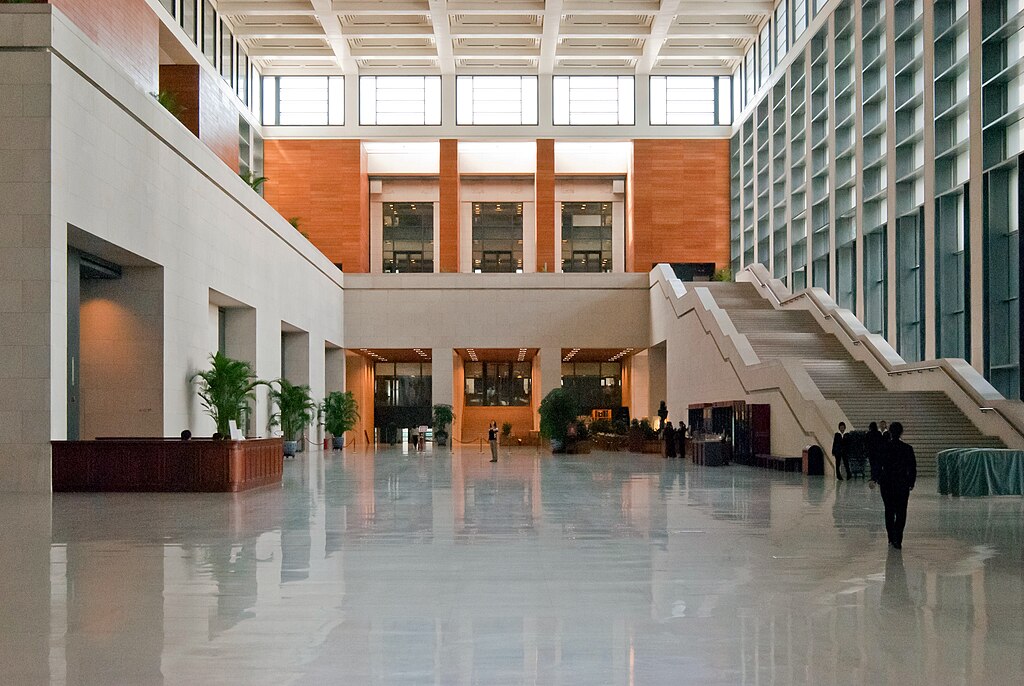
As the world’s largest national-level professional film museum and a landmark for China’s cinema centenary, the Chinese National Film Museum(CNFM) was co-built by the former State Administration of Radio, Film and Television and Beijing Municipal People’s Government. Completed in 2005 and opened to the public in 2007, the museum’s striking black exterior is inspired by a film clapperboard, giving it a distinctive artistic presence.
Inside, 21 permanent halls (Film Art Exhibition Area and Technology Expo & Experience Area) chronicle over a century of Chinese cinema and provide interactive experiences in filming, sound recording, and special effects. It also has 6 professional cinemas, including an IMAX GT Theater (capacity over 1,000). As a National First-Class Museum, it is responsible for relic collection, academic research, and exhibitions, while also transcending the conventional museum model through innovative educational and immersive programming. In 2025, it became one of Beijing’s first cultural relics institution reform pilots, upgrading management to serve as a key platform for Chinese culture promotion and public artistic literacy enhancement.
Approaches
The museum faces several challenges:
- Lagging Exhibition Updates: The fast-developing film industry brings new technologies, works, and talents, but the museum’s long update cycle (due to mechanism and resource limits) fails to reflect latest achievements, reducing timeliness.
- Limited Interactivity and Audience Engagement:: Despite adding technology experience zones, it still relies on static displays (relics, pictures, texts). Interactive programs lack technological depth and diversity, especially failing to attract young people amid digital cultural consumption.
- Educational Gaps: Transforming film resources into educational ones is tough; systematic programs to stimulate teens’ interest and creativity are urgently needed.
- Financial Sustainability: Operating as a public institution with free or nominal-cost admission, the museum must develop a self-sustaining business model to diversify its funding sources and achieve financial self-sufficiency.
- Balancing Preservation with Public Access: Precious collections (early film reels, posters) require strict conditions (15-20℃, 45%-55% humidity, ≤50lux UV-proof), making balance a key challenge.
The aims of the CNFM strategies are:
- To establish a modern film culture hub that integrates exhibitions, education, cultural experiences, and entertainment;
- Become a national primary and secondary school film education practice base;
- Enhance viewers’ participation, gain, and satisfaction via technology.
CNFM’s curatorial and educational approach is based on four principles:
- Align with municipal standards to protect public cultural rights;
- Develop a series of branded public education programs;
- Cooperate with schools, enterprises, and communities for a multi-dimensional network;
- Promote the “Film +” strategy to integrate film with education, technology, tourism, and consumption.
Resources
Rethinking Heritage Futures, Online Workshop “Designing Heritage Events”, 18 March 2025, Nottingham Trent University (NTU), Communication University of China (CUC).
Projects
1. Enhancing Strategic Planning and Institutional Reform
The museum formulated a Trial Work Plan for its role in the national cultural institution reform pilot. It established a leading group with five specialized task forces and conducted extensive field research to benchmark against best practices. It launched a key research project titled Difficulties and Countermeasures of Film and Television Museums in the Reform Pilot of Cultural and Cultural Relics Institutions and 13 sub-projects, exploring the museum’s reform path from the perspectives of institutional mechanism reform and external cooperation. In addition, it compiled the Special Report on Policy Information of Cultural and Cultural Relics System Reform, which collects reform policies and practical cases to provide references for the reform pilot work.
2. Improve the Institutional System and Strengthen Public Welfare Attributes
Aligning with municipal-level standards, the museum formulated a list of free public cultural services covering 8 aspects, 17 contents, and 27 standards to safeguard basic cultural rights. It also formulated and implemented a list of items related to cultural and creative (CC) revenue, a financial revenue and expenditure management approval process for CC revenue, and issued a series of systems including the Trial Management System for CC Fund Expenditure, Trial Measures for the Inbound and Outbound Management of CC Products, Trial Measures for the Selection of CC Project Partners, and Trial Work Plan for Study Tours. The museum also obtained the qualification for issuing invoices for study tour revenue, standardizing the management of CC operations and study tour activities.
3. Continuous Update of Exhibition Content
To keep its content fresh and engaging, the museum continually updates its permanent collections and hosts diverse special exhibitions. These have included “Who is Ne Zha?”, “The White Snake: Love – A Behind-the-Scenes Look”, and the “Our Victory” Audio-Visual Exhibition, all ensuring the museum remains topical and dynamic. It also added night sessions in conjunction with popular films such as Ne Zha, and launched micro-film activities to expand new forms of content including feature-length and short videos.
4. Regional Collaboration and Inclusive Cultural Access
The museum deepened regional cooperation by partnering with Guo’an First City in Hebei to jointly develop special exhibitions and public welfare cinemas, bringing national-level film and cultural resources to local communities. Initiatives such as “Exploring Film Production” integrate exhibitions, interactive experiences, and educational activities, while public welfare cinemas offer targeted screenings for residents and students. Building on Guo’an First City’s educational base, the “Light and Shadow Study Tour” program introduced diverse, age-specific film study routes and hands-on training, extending film culture to people of all ages.
5. Branded Educational Programs
The National Children’s Film Dubbing Promotion and Exhibition has become a major youth film education brand, engaging nearly 30,000 young participants across 23 regions through an integrated “online + offline” and “domestic + international” model. Complementing this, the short video series Old Ban Talks About Collections uses digital platforms like TikTok and Bilibili to share behind-the-scenes stories in a light, engaging tone, effectively connecting with younger audiences
6. Integration of Film Culture with Major National Events
During the 2022 Beijing Winter Olympics, the museum launched a series of activities including thematic exhibitions, film screenings, cultural performances, and event live broadcasts, realizing the organic integration of film culture and sports events. The circular hall collects and displays the large screens and film-television technology systems used in the Beijing Winter Olympics Opening Ceremony—with a 25-meter-high and 10-meter-wide vertical screen and a 700-square-meter floor screen, it representatively reproduces the layout and wonderful moments of the Opening Ceremony at the National Stadium. Combined with traditional festivals such as the Dragon Boat Festival and Mid-Autumn Festival, important anniversaries such as July 1st (Party Founding Day) and October 1st (National Day), and solar terms such as Beginning of Autumn and White Dew, the museum launched four-screen linked video content. Together with the original Olympic Four drums from the 2008 Beijing Summer Olympics Opening Ceremony, these have become popular “check-in” spots for viewers, as well as new spaces for immersive experience interaction and thematic atmosphere creation.
7. Technology-Enhanced Visitor Experience and Service Optimisation
With China’s first IMAX GT Laser Theater and upgraded digital cinemas, the museum continues to enhance immersive experiences through innovations such as the XR interactive project 2001: A Space Odyssey. Its participation in major events like the 2025 CIFTIS showcased the technological evolution of Chinese cinema over 120 years. On the service front, digital upgrades—including a faster online reservation system, intelligent navigation robots, and improved visitor amenities—have significantly optimized the audience experience.
8. Academic Exchange and International Cooperation
The museum strengthened its academic and international engagement through high-level forums such as “Film Cooperation, Exchange, and Emotional Resonance from a Global Perspective” and participation in events like Beijing Animation Week. Overseas exhibitions and screenings in Malaysia and Thailand showcased the achievements of Chinese cinema and promoted cultural resonance abroad, supported by cooperation agreements and branded educational program exchanges
9. Innovation in Operations and Diversified Revenue Models
In terms of CC product sales, the museum launched 16 new products during the summer vacation, including electronic poster machines and bookmarks made from recycled film reels, increasing the number of on-sale CC products to over 80 types and further enriching CC revenue sources. In terms of ticket revenue, the museum steadily advanced a differentiated film ticket pricing scheme. By creating high-quality services such as the “golden seat area” in the giant-screen theater, it enhanced the value of the viewing experience and realized a reasonable match between price and service.
Challenges and Successes
Challenges
Institutional Reform
- Difficulties in cross-departmental coordination.
- Unclear approval processes for CC (Cultural & Creative) revenue management.
Regional Collaboration
- Unbalanced resource distribution between Beijing and Hebei.
- Complexities in organizing activities and coordinating venues.
- Need to balance coverage and quality of public welfare screenings.
Branded Educational Programs
- Increased organizational and coordination complexity as programs expanded.
- Tension between maintaining professional judging standards and broad public appeal.
- Difficulty aligning study tour curricula with school teaching requirements.
- High demands on instructor professionalism.
Technology & Cinema Operations
- High costs for updating advanced technology (e.g., IMAX GT Laser Theater).
- Challenges in balancing artistic film selection with audience preferences.
- Strain on maintenance and operation resources due to frequent content updates.
International Exchanges
- Complex foreign affairs approval processes.
- High implementation and logistical costs.
- Need to balance cultural export with local audience acceptance.
Exhibitions & Public Services
- Slow updates to permanent exhibitions.
- Maintenance difficulties for large-scale interactive equipment.
- Long visitor waiting times.
Successes
Institutional Reform
- Issued reform pilot work plan and supporting systems.
- Established standardized, institutional management for CC operations and study tour programs.
Regional Collaboration
- “Light and Shadow Study Tour” became highly popular with strong reservations.
- Public welfare screenings expanded to Langfang and other regions.
- Promoted effective regional sharing of cultural resources.
Branded Educational Programs
- National Children’s Film Dubbing Activity developed into a nationally influential film and television education brand.
- Expanded coverage to 23 regions and attracted over 30,000 teenage participants.
Technology & Cinema Operations
- Technological experiences (e.g., XR project A Space Odyssey) became core attractions.
- Significantly enhanced audience immersion and engagement.
International Exchanges
- Successfully held Chinese film screenings and cultural exchange events in Malaysia and Thailand (2025).
- Signed multiple cooperation memorandums promoting global communication of Chinese film culture.
Exhibitions & Public Services
- Launched multiple thematic special exhibitions.
- Upgraded online reservation and intelligent navigation systems.
- Achieved over 1 million annual visitors and rising public satisfaction levels.
Honors & Recognition
- Rated as a National First-Class Museum and a designated resource unit for Beijing’s primary and secondary school social practice programs.
- Awarded the title of “National Civilized Unit (7th Session)” in 2025, strengthening social influence.
Discussion
The CNFM museum has made progress in institutional reform, regional collaboration, tech integration, education, and international exchanges. However, it still faces pressure from industry development, content updates, resource sharing, and efficiency.
Future initiatives will focus on bridging strategic planning with grassroots innovation, deepening “Film +” integration, optimizing audience-centered services, and integrating relics, exhibitions, and technology. This will enhance its cultural communication, educational influence, and international voice, solidifying its role as a national film platform for industry progress and public service.
Further Resources
Websites:
Chinese National Film Museum https://r.visitbeijing.com.cn/museum/608
Images
Image Credit: Wikimedia Commons.